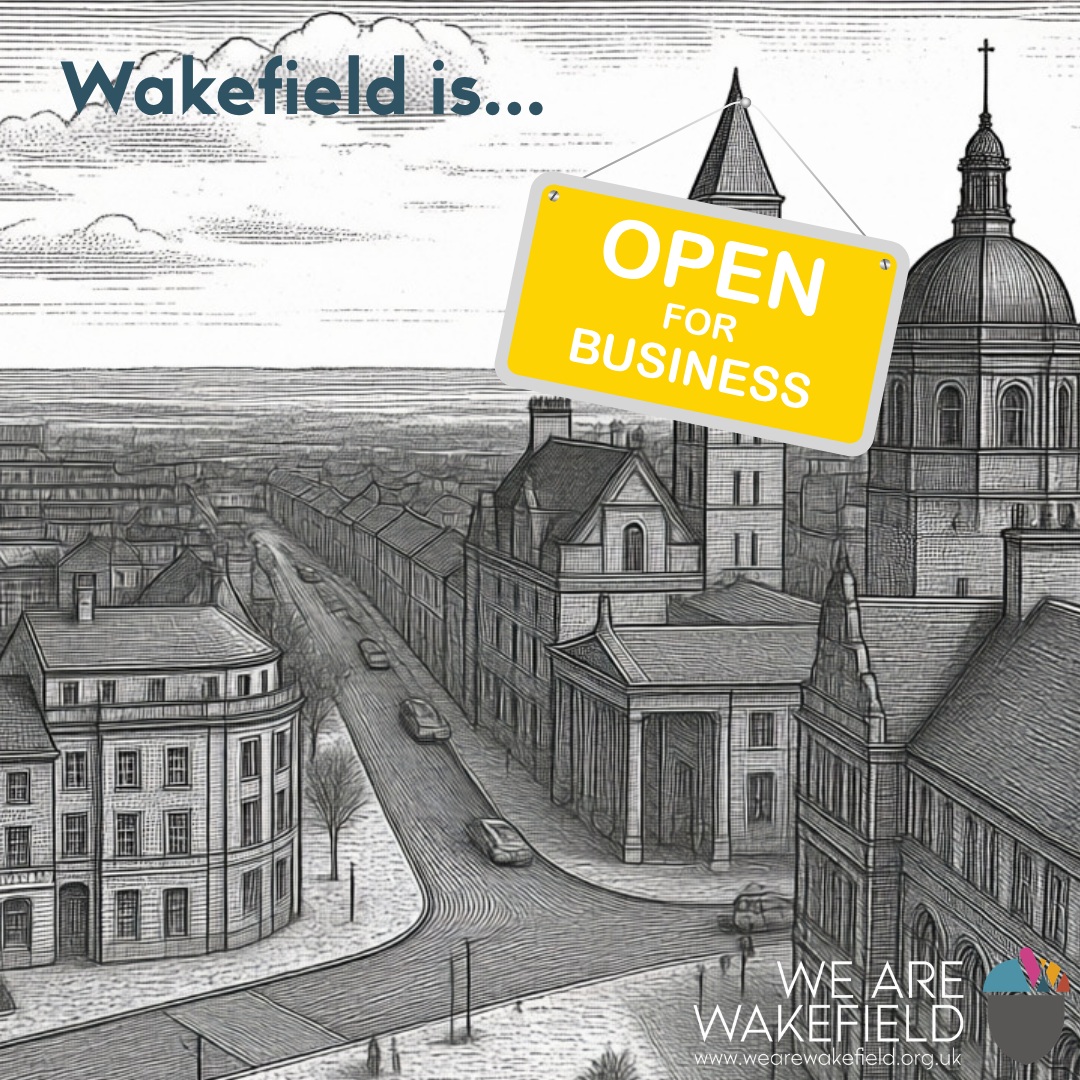
The launch of Wakefield Council’s new Economic Growth Plan on 4 August marks an important milestone in the district’s journey towards a stronger, more prosperous future. More than a strategy document, the plan provides a clear vision for how Wakefield can build on its strengths, attract investment, create higher-value jobs and ensure residents have the skills needed to thrive in a changing economy.
For businesses across the district, the message is clear: Wakefield is open for business. But perhaps more importantly, Wakefield has a plan for how it intends to compete, grow and succeed in the years ahead.
Building on Strong Foundations
Wakefield already contributes more than £10 billion to the UK economy and is recognised as a critical economic hub within West Yorkshire and the wider North of England. Its strategic location, world-class transport connectivity and established strengths in manufacturing and logistics have helped the district weather economic challenges better than many comparable areas.
However, the Economic Growth Plan is refreshingly honest about the challenges facing the district.
Research underpinning the plan identifies that Wakefield is currently operating within what it describes as a “low-skill, low-GVA equilibrium”, where too much of the economy is concentrated in lower productivity sectors, limiting wage growth and making it harder to attract and retain highly skilled talent.
The plan’s overarching objective is therefore simple but ambitious: to increase local incomes and improve economic wellbeing across the district.
Five Priorities for Growth
 To achieve this, Wakefield Council has identified five strategic priorities that build on the district’s existing strengths while creating opportunities for future growth. These include:
- Delivering More Housing in Connected Urban Areas
The plan proposes higher-density housing and mixed-use development in well-connected urban centres, helping more people access employment opportunities while supporting local high streets and communities.
- Growing Advanced Manufacturing
Manufacturing remains one of Wakefield’s most important sectors, but the focus is now on supporting innovative and future-facing businesses that can compete internationally despite pressures such as rising energy costs.
- Creating More Value from Logistics
Wakefield’s location means demand for logistics space remains strong. The plan aims to encourage higher-value activities, support indigenous businesses and attract companies that can bring skilled jobs and leadership functions into the district.
- Developing the Creative Economy
From Production Park to The Hepworth Wakefield and Yorkshire Sculpture Park, the district already possesses significant creative assets. The plan seeks to better connect these strengths to town and city centre regeneration and wider economic growth.
- Building a Skilled and Healthy Workforce
Skills, education and workforce wellbeing sit at the heart of the plan. A particular focus will be developing pathways between employers, education providers and learners to ensure businesses can access the talent they need in the future.
The Importance of Partnership
While the Economic Growth Plan sets out a clear direction of travel, delivering meaningful economic growth cannot be achieved by the Council alone.
Success will depend upon businesses, educators, public sector organisations and membership networks working together towards shared goals. This is where organisations such as We Are Wakefield can play an increasingly important role.
As the district’s largest independent business membership organisation, We Are Wakefield already provides the platform, connections and collaborative environment needed to support many of the plan’s ambitions.
Whether it’s helping businesses access new opportunities, facilitating knowledge sharing, supporting workforce development or fostering stronger partnerships between sectors, these activities directly contribute to the conditions needed for sustainable growth.
Turning Strategy into Action
One of the strengths of We Are Wakefield is its ability to bring together organisations that may otherwise never meet.
Through networking events, business engagement activities and specialist forums, businesses gain access to practical support, peer-to-peer learning and opportunities to collaborate on shared challenges.
This is particularly relevant to the growth sectors identified within the Economic Growth Plan.
The expanding We Are Wakefield Manufacturing Forum is already creating a valuable space for manufacturers to exchange ideas, discuss workforce challenges, explore innovation and identify opportunities for collaboration. As advanced manufacturing becomes an increasing area of focus within the district, forums such as these can help businesses translate strategy into action. Similarly, businesses operating within logistics, professional services and creative industries can benefit from stronger connections and greater visibility within the local business community.
Supporting Skills and Talent
 The plan places significant emphasis on skills development, echoing recommendations from the Wakefield Futures Commission and proposals such as the Wakefield Futures Centre.
Businesses consistently identify skills as one of their biggest opportunities and challenges. Through its membership network, We Are Wakefield can help strengthen the conversation between employers, education providers and training organisations, ensuring that businesses have a voice in shaping future workforce development.
This collaborative approach will be essential if Wakefield is to bridge skills gaps and create the talent pipeline needed to support higher-value industries.
 A Shared Ambition for Wakefield
The Economic Growth Plan is ultimately about creating more opportunities for businesses and residents alike. It is about attracting investment, supporting innovation, increasing productivity and raising living standards across the district.
Achieving these ambitions will require leadership, investment and partnership.
The Council has set out a compelling vision. Businesses now have an opportunity to engage with that vision and help shape how it is delivered. Through organisations such as We Are Wakefield, the district already has the networks, expertise and collaborative spirit needed to support that journey. With regular meetings in place with council leaders, I will be asking HOW we achieve these ambitious goals and how we as an organisation work alongside them to ensure our members come with us on the journey.
As Wakefield looks to the future, one thing is clear: economic growth is not something that happens to a place. It is something that businesses, communities and partners create together.
And together, Wakefield is well positioned to make that vision a reality.
Claire Sutherley DL
Managing Director
We Are Wakefield
Sources: [wakefield.gov.uk], [wakefieldfirst.com]



 long-term competitive advantage, not a cost. Over the last two years, we’ve expanded our apprenticeship programme to support 40 apprentices across Levels 2 to 6 and launched our own manufacturing apprenticeship pathway to help address skills shortages within the fenestration sector.
 A similar commitment to developing future talent is evident across the professional services sector.
 Alternative’ podcast across YouTube and Spotify, and grown our newsletter to make expert legal guidance more accessible than ever.
 We have promoted from within, invested in face-to-face training, including management training for specific managers, and that has allowed me to take a step back from the day-to-day operations and focus on business strategy and future growth.
 catering to those who don’t have the capacity, solving a problem for them whilst growing our business. Utilise ai for efficiencies in the more repetitive tasks and helping manage our systems. The nature of hospitality we have a core team and a team of trusted freelancers which helps us manage the seasonal variances.




 What is likely to happen over the coming months is not an overnight transformation, but a period of review, reprioritisation and relationship-building. New political leadership typically brings a fresh approach, new areas of emphasis and a different tone. Existing policies, projects and spending decisions may be revisited. Some initiatives may be accelerated, others may be slowed down or reshaped. That is a normal part of democratic change. It does not necessarily mean instability, but it does mean a period in which organisations across the district will need to pay attention, stay informed and remain engaged.
 At times like this, collaboration matters more than ever. When there is uncertainty, people look for reassurance, connection and reliable information. When priorities are being reassessed, it becomes even more valuable for organisations to share intelligence, support one another and remain part of a wider conversation about the district’s future. This is especially true in a place like Wakefield, where the strength of our local networks has always been one of our greatest assets.


















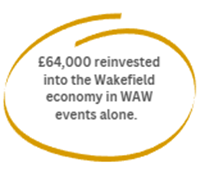 value directly through the connections, partnerships and opportunities made within the network. The survey reveals that more than a quarter of members gained between £1,001 and £5,000 of business from WAW relationships, while many others achieved far higher returns, with almost one in five securing up to £10,000 and a further portion exceeding £25,000. These gains are not isolated wins — they demonstrate a pattern of meaningful, commercially valuable relationships forming across the district.
 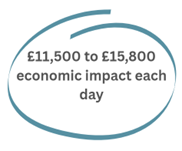 n per year. Put simply, the members of We Are Wakefield are collectively generating the equivalent of £11,500 to £15,800 of economic impact every single day. And because these figures only capture measurable returns, the real impact is almost certainly even greater.
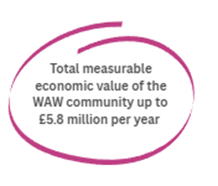 Behind these numbers are hundreds of stories of growth: partnerships that have become long-term alliances, introductions that turned into transformative opportunities, and businesses that have found not only financial success but a sense of belonging and shared purpose. Members talk about growing their confidence, expanding their visibility, learning from one another, and feeling deeply supported by a community that genuinely wants to see them succeed. The economic impact is powerful — but the cultural impact may be even more significant.